Artist’s Statement
For more than 20 years, Travis has been working to turn the strange little ideas in his head into something other people can actually see. Photography has been his primary tool for doing that, giving him a way to explore subjects that interest, frustrate, amuse, or occasionally obsess him.
Artists often find themselves at the intersection of creativity and eating. Unfortunately, being wildly creative does not always lead to wildly successful grocery shopping. Eating, however, is a surprisingly powerful motivator, so most artists eventually accept professional commissions. In Travis’s case, he photographs portraits as uniquely as his clients are willing to tolerate. That keeps the refrigerator reasonably full and gives him the freedom to pursue personal projects where he can be considerably less concerned with whether anyone thinks the idea is sensible.
Much of his personal work is created with his muse, Christina, who has been the willing, and occasionally unsuspecting, participant in many of his photographic and musical experiments. She continues to inspire much of the imaginative work he creates. He has, on occasion, been known to work with other people as well.
The White Room
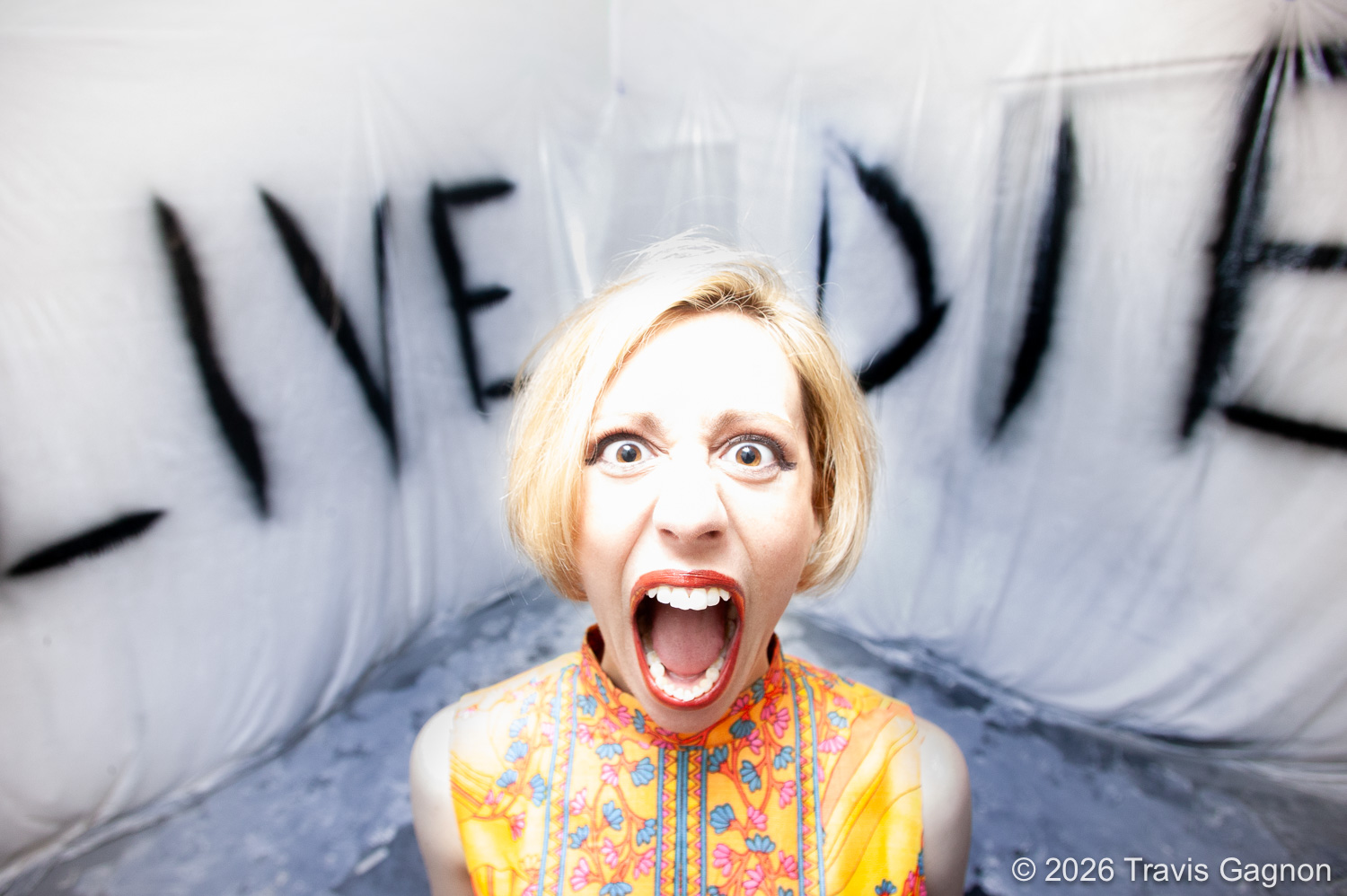
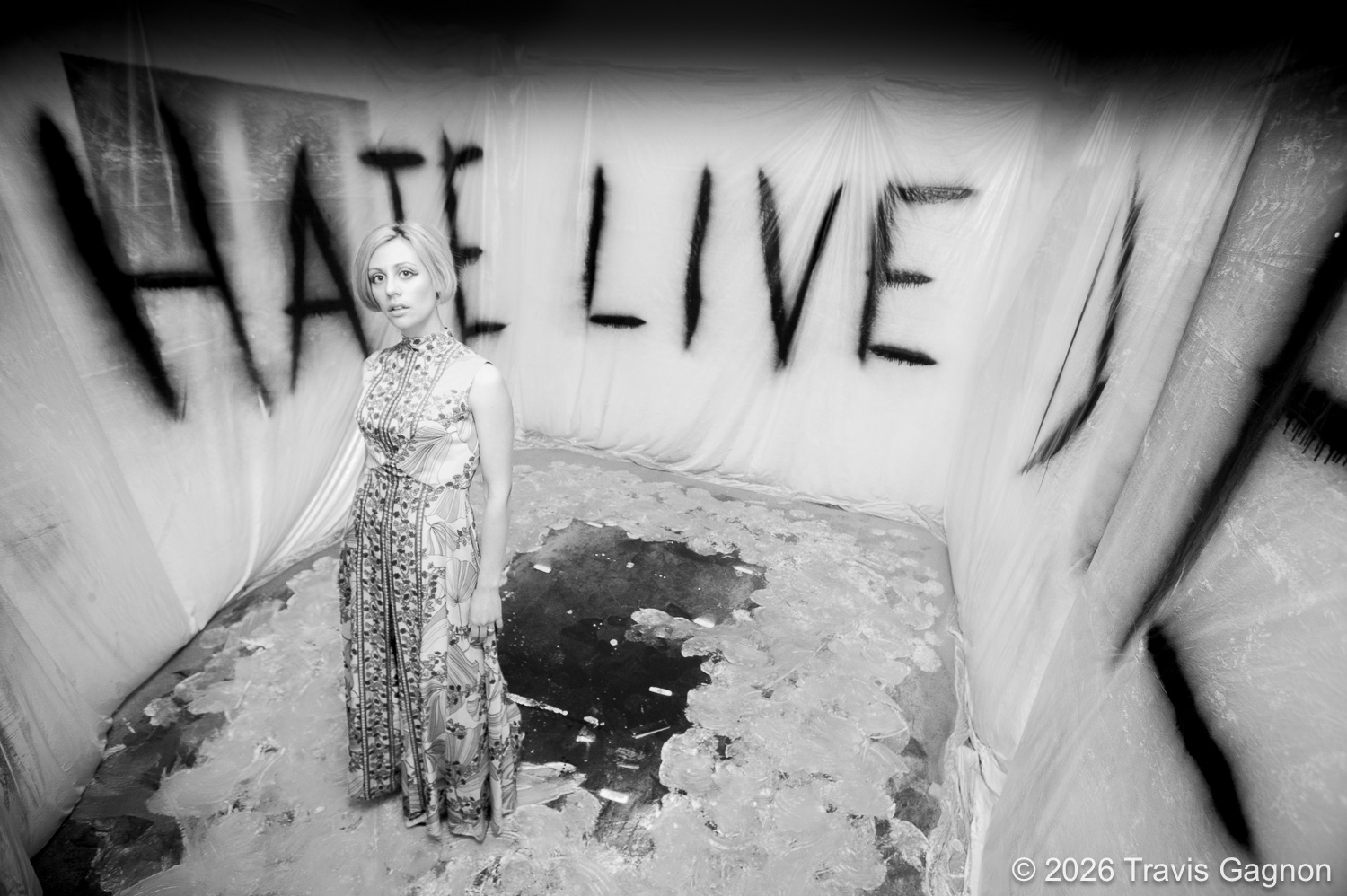
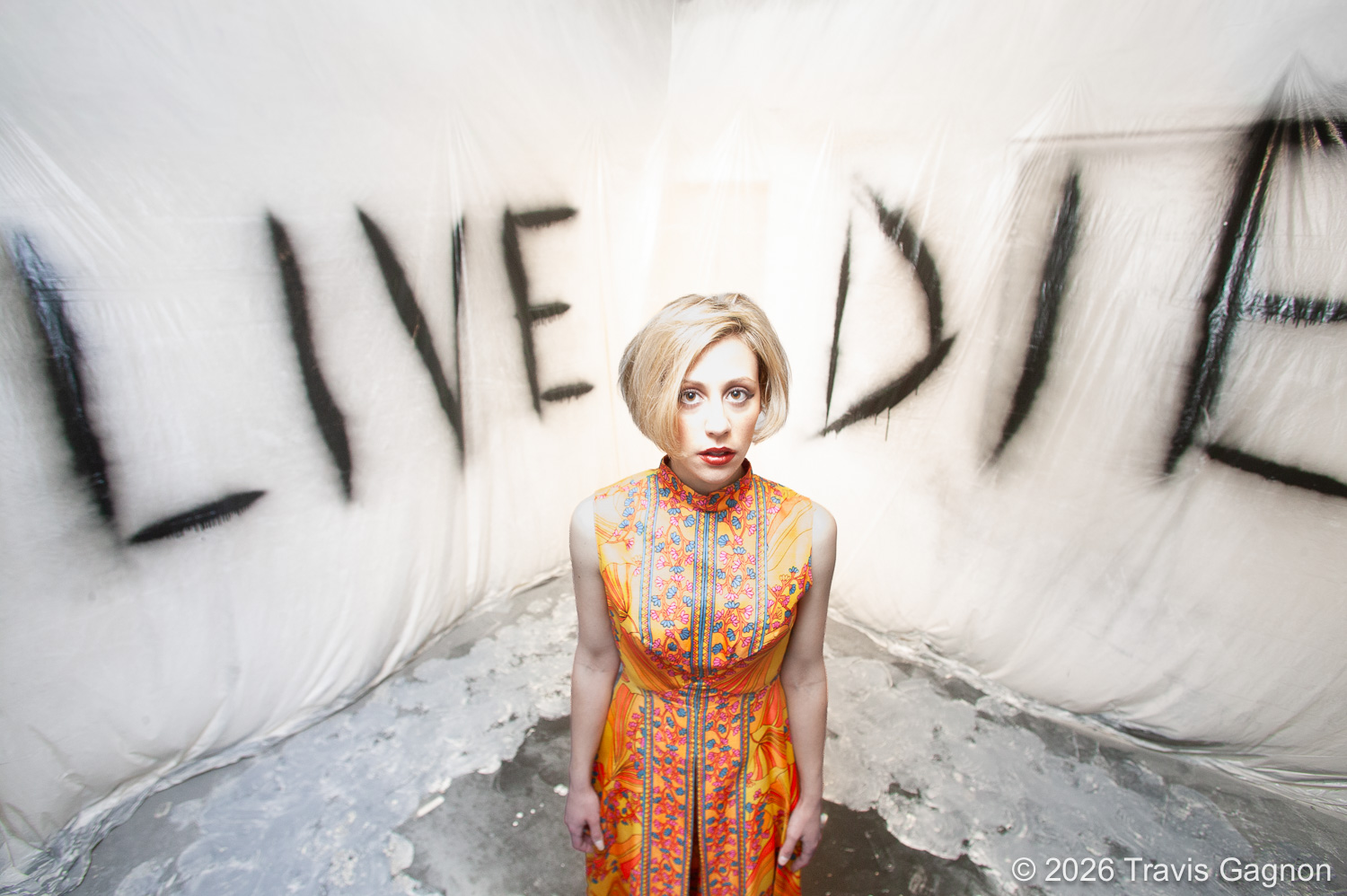
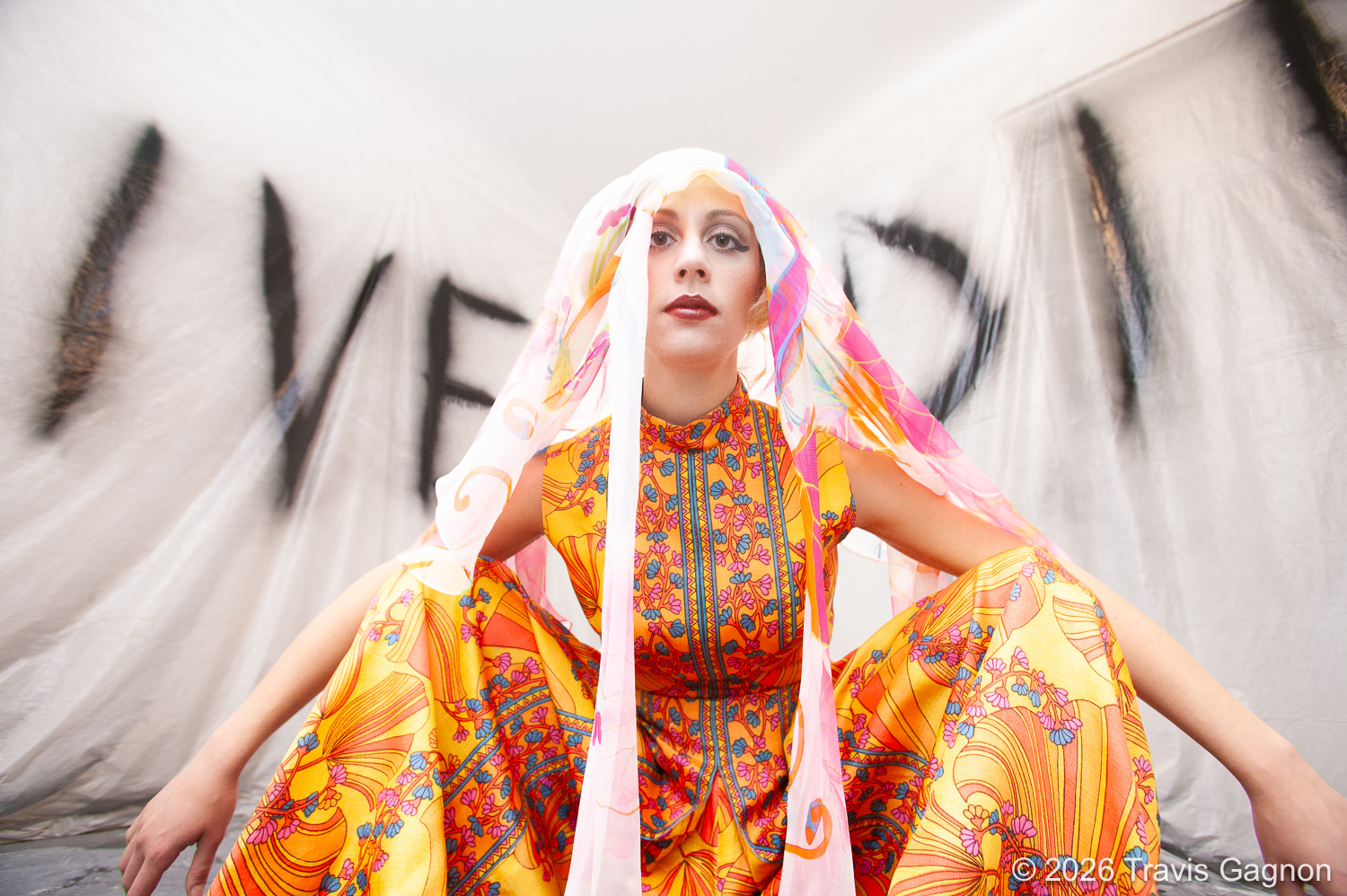
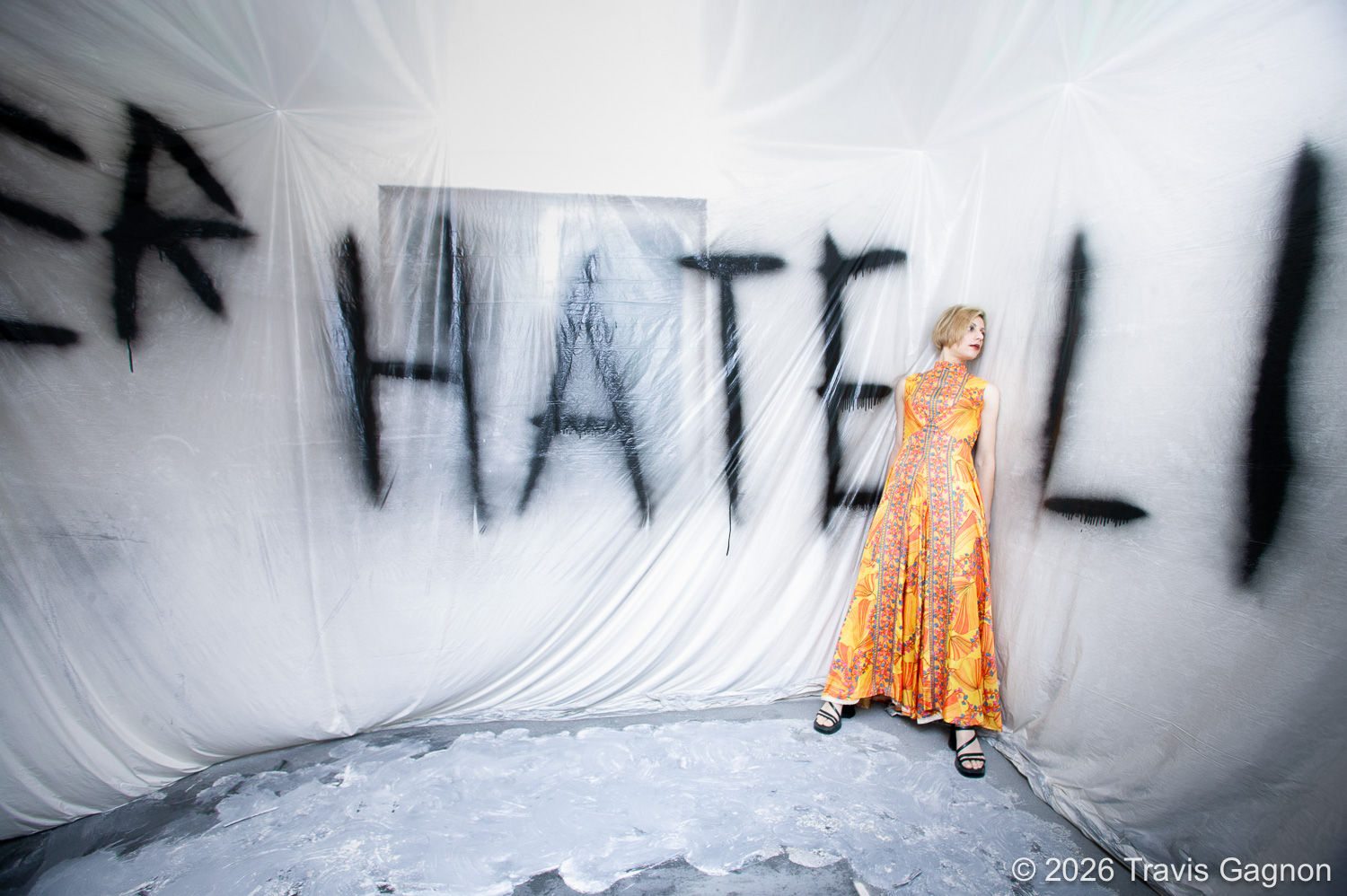
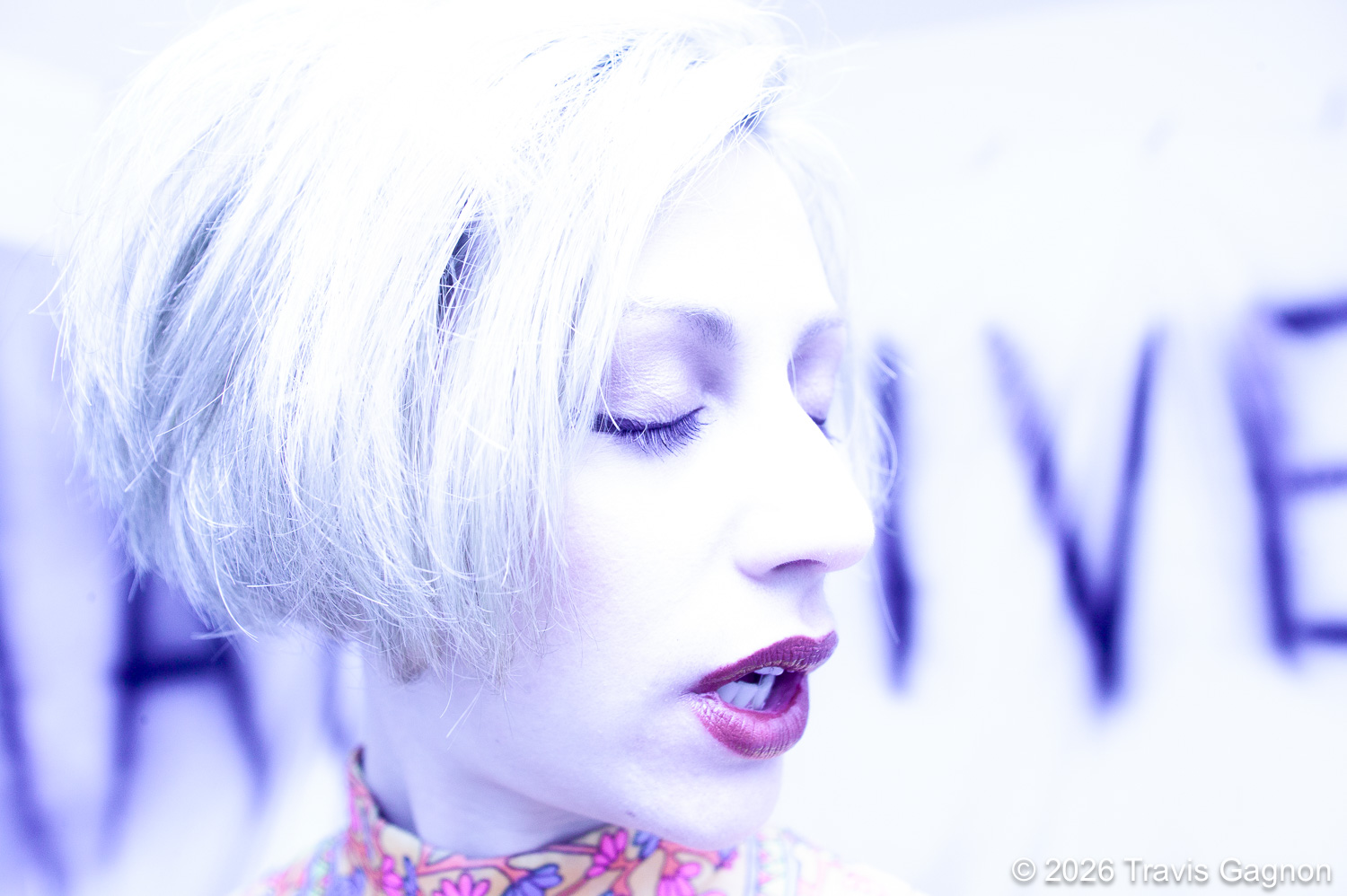
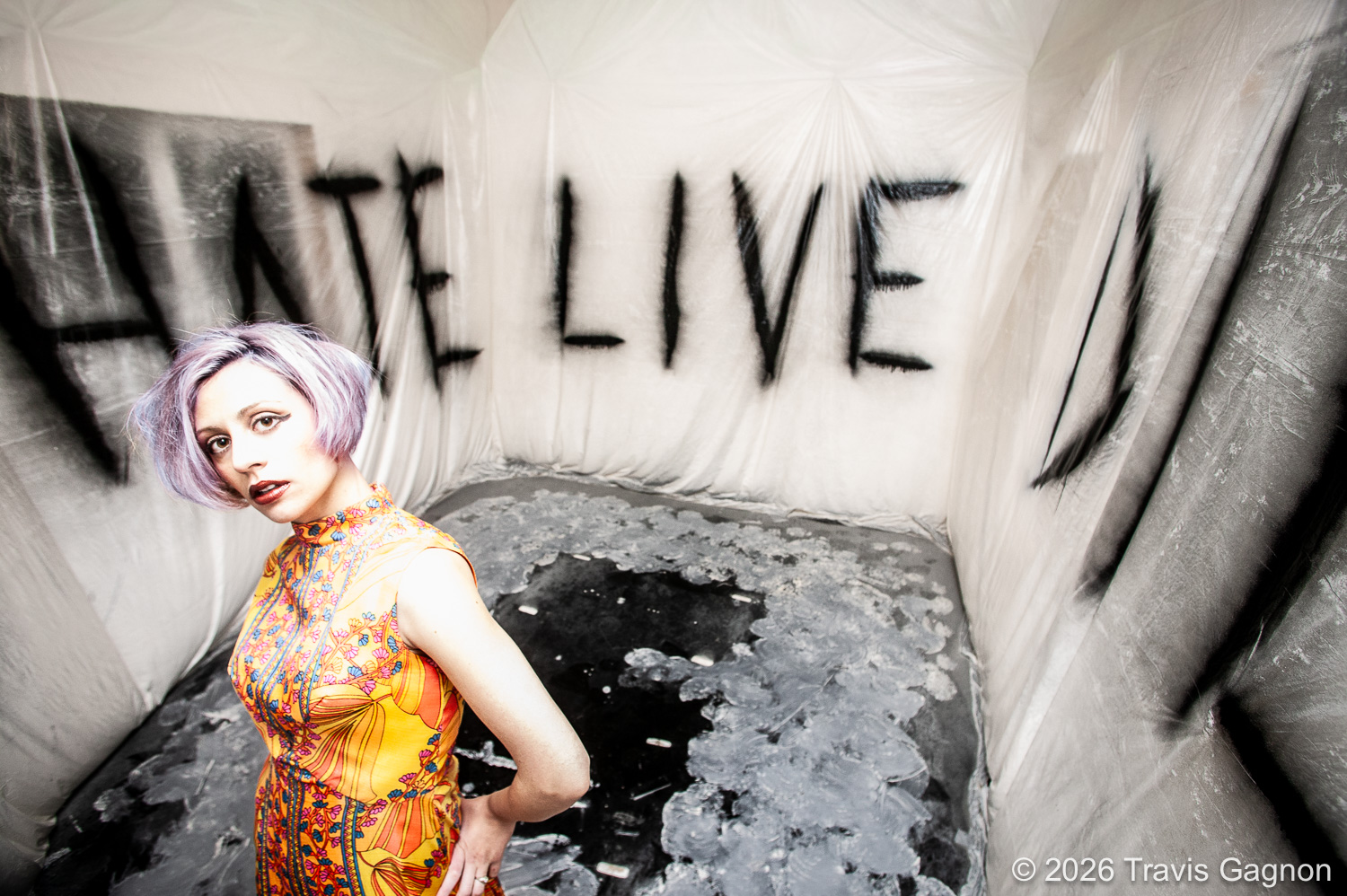
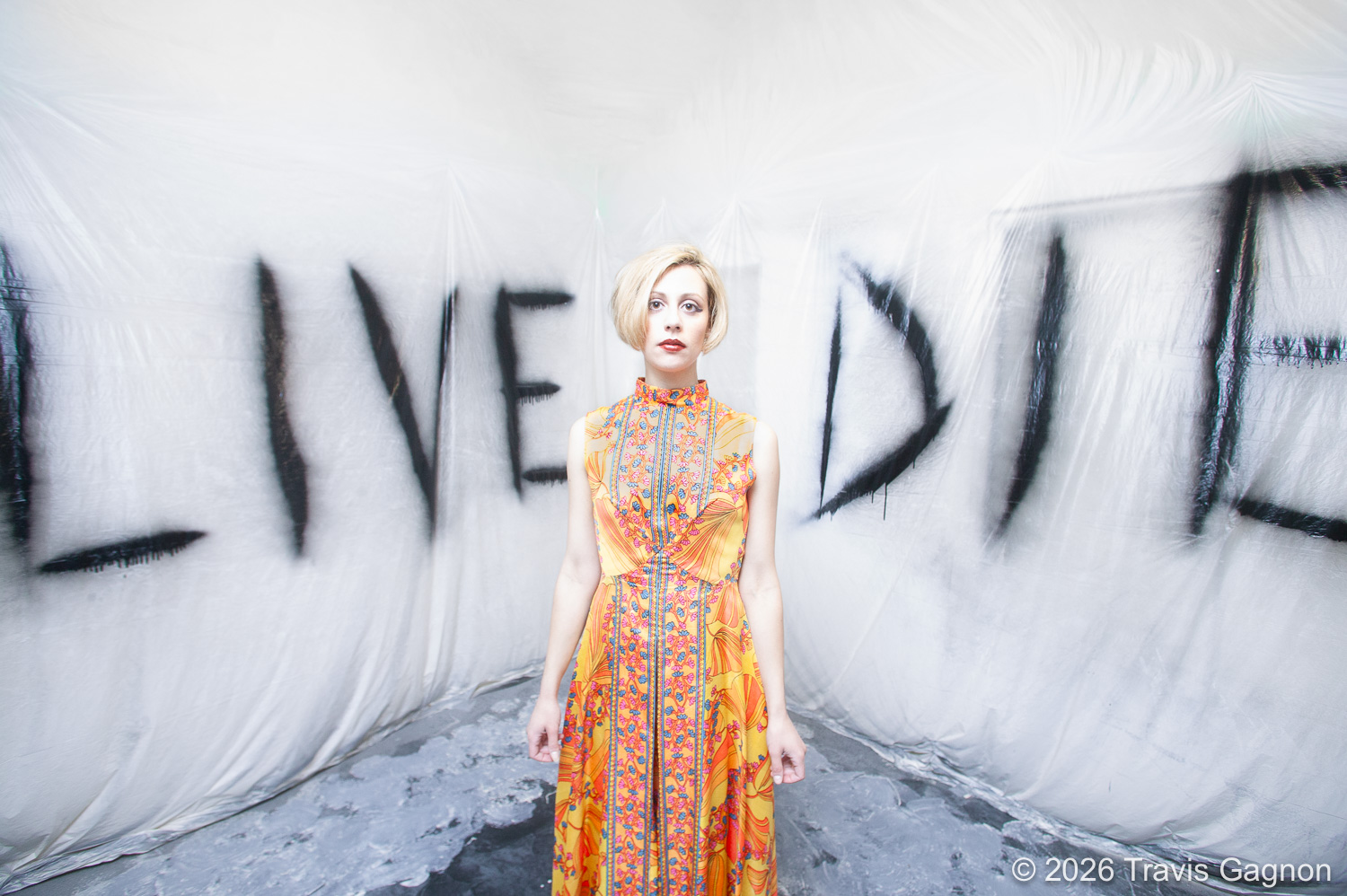
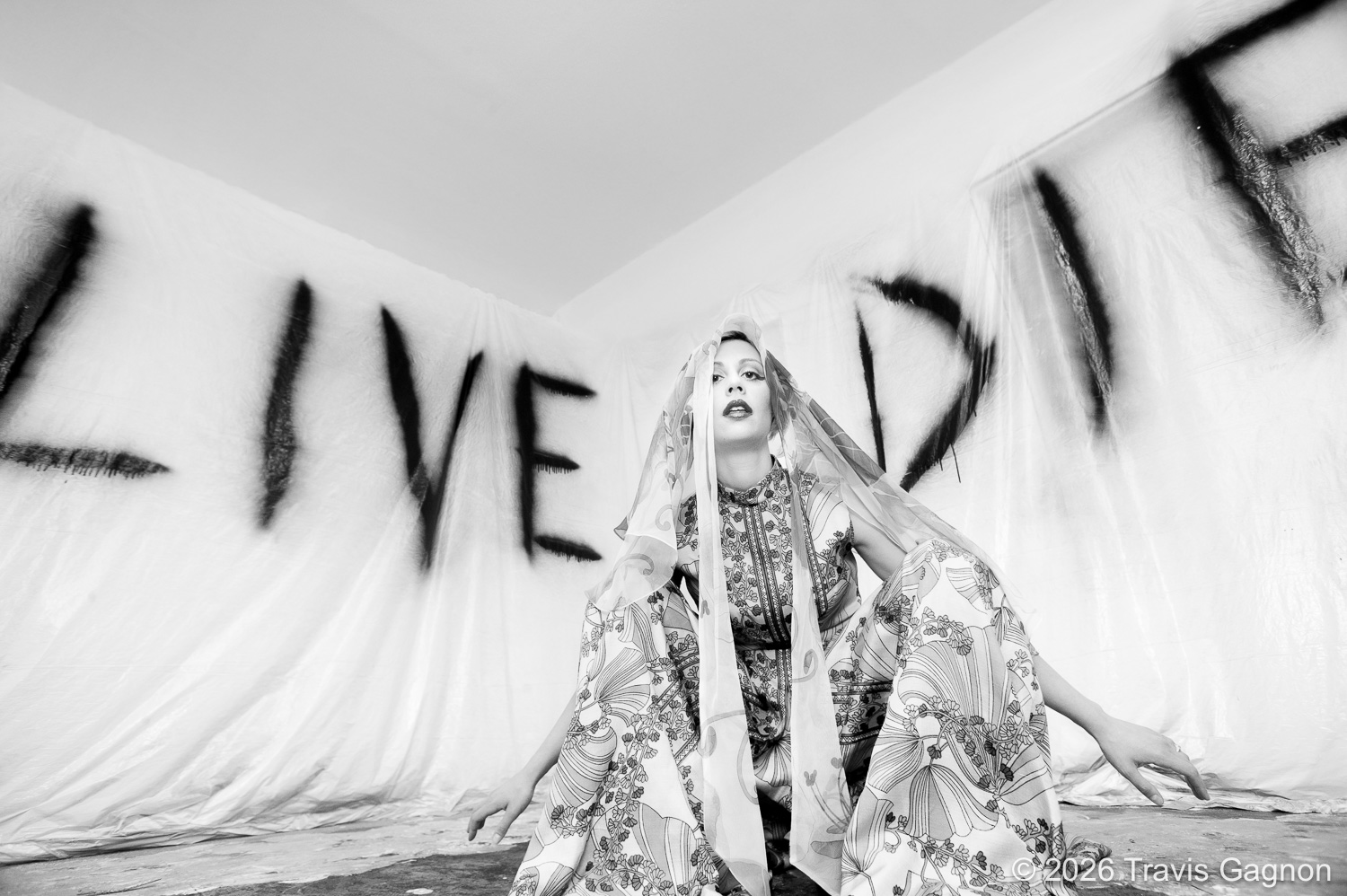
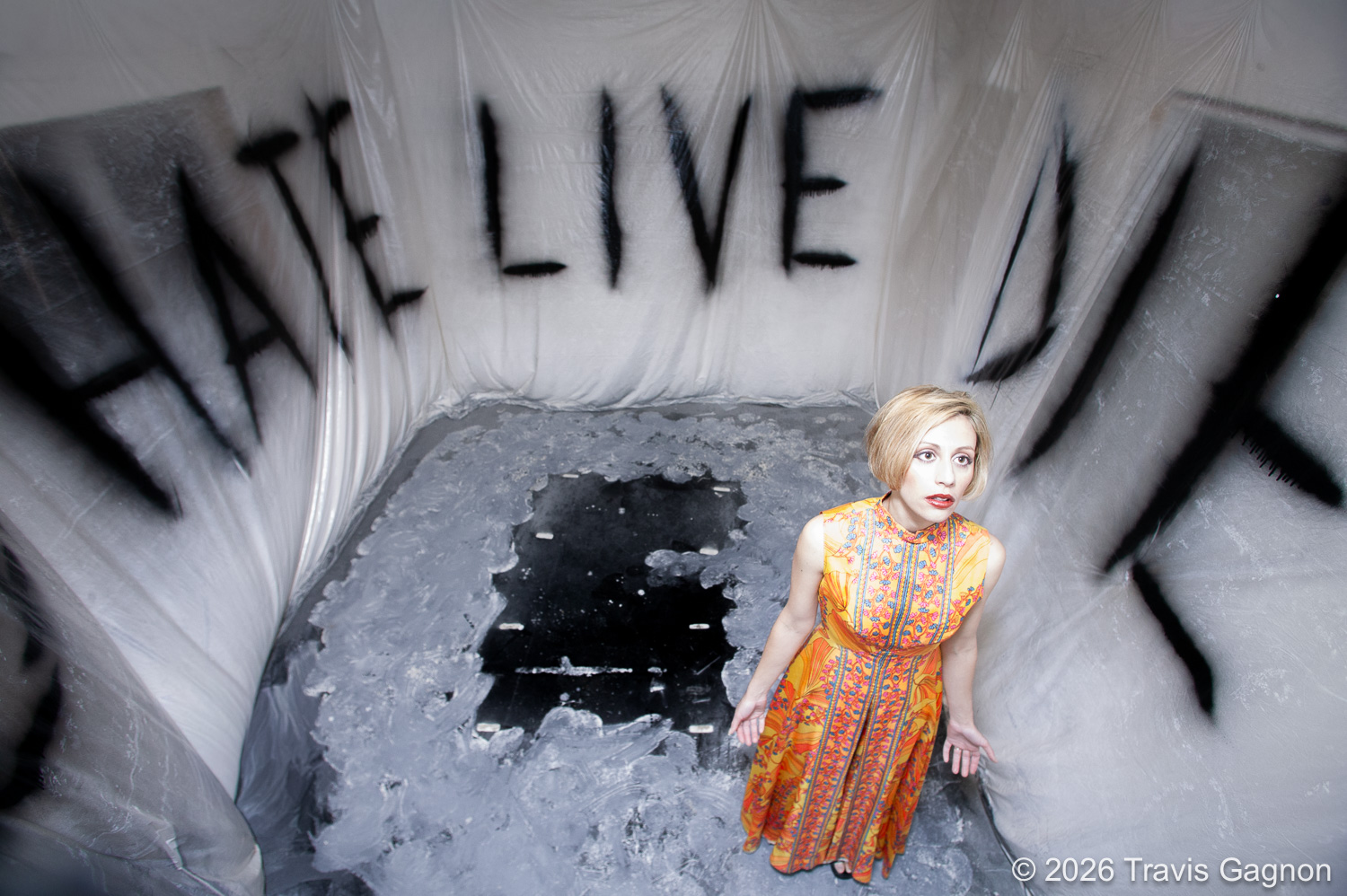
The White Room was inspired by the contradiction at the center of social media: tools designed to connect people can also leave them increasingly isolated. We are surrounded by constant communication, yet much of it happens through screens, fragments, reactions, and carefully constructed versions of ourselves. The more connected we appear to be, the easier it becomes to confuse visibility with intimacy and access with genuine human connection.
The solitary figure inside the white room represents that isolation. The words HATE, LIVE, DIE reduce a complicated human experience into blunt emotional extremes, much like the language and reactions that dominate online spaces. The subject moves between composure, vulnerability, confrontation, and distress, but every emotion happens alone. The distorted perspectives, blown highlights, abrupt color shifts, and enclosed environment are meant to create a sense of psychological pressure and instability.
At its core, the series is about what happens when people spend too much time alone with themselves while believing they are surrounded by everyone else. Social media can create extraordinary opportunities for communication, but it can also fracture people into private worlds where everyone is watching, reacting, and performing without necessarily connecting. The White Room is not a rejection of technology, but a reflection on the cost of replacing human presence with the appearance of connection.
Mon camion bleu est tombé en panne
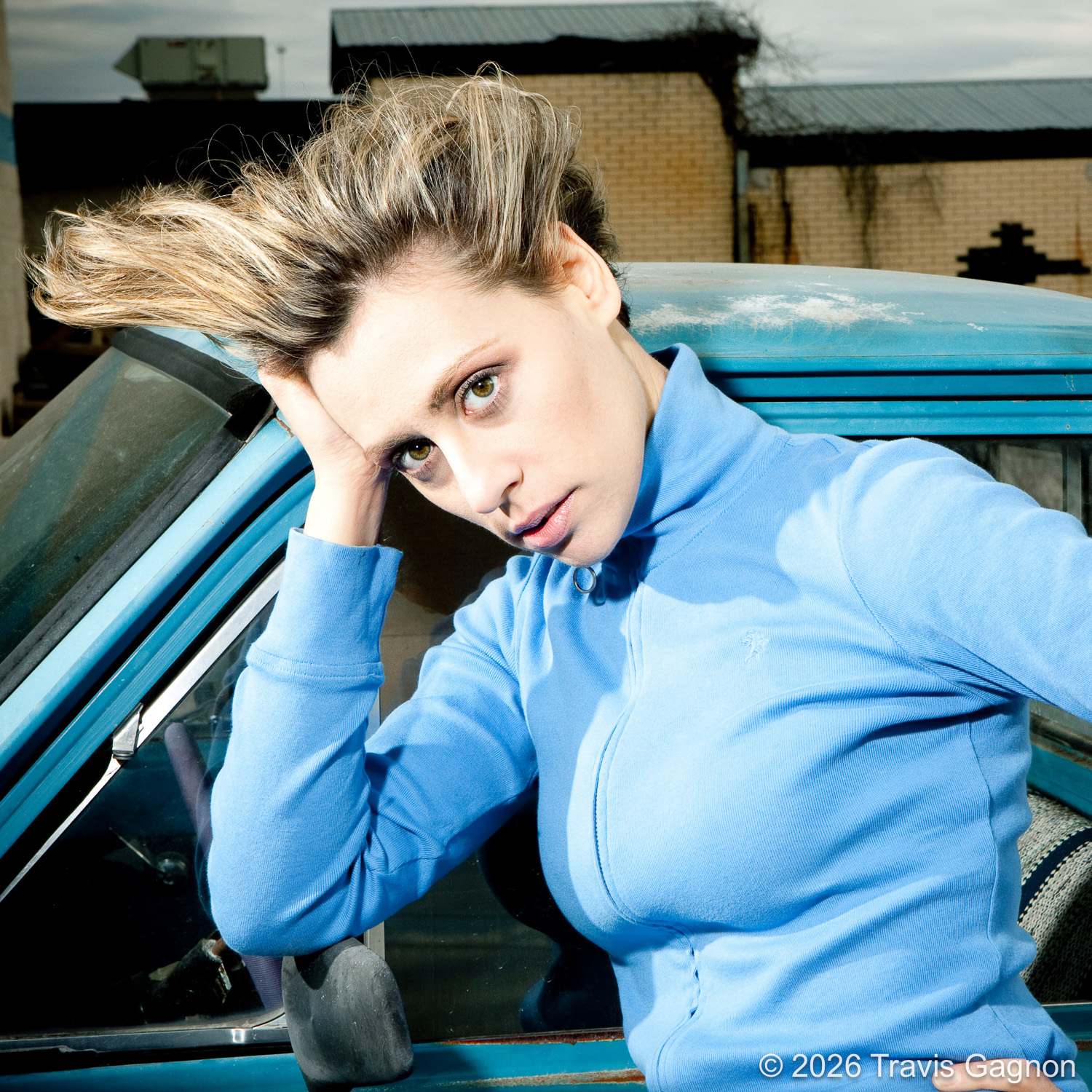
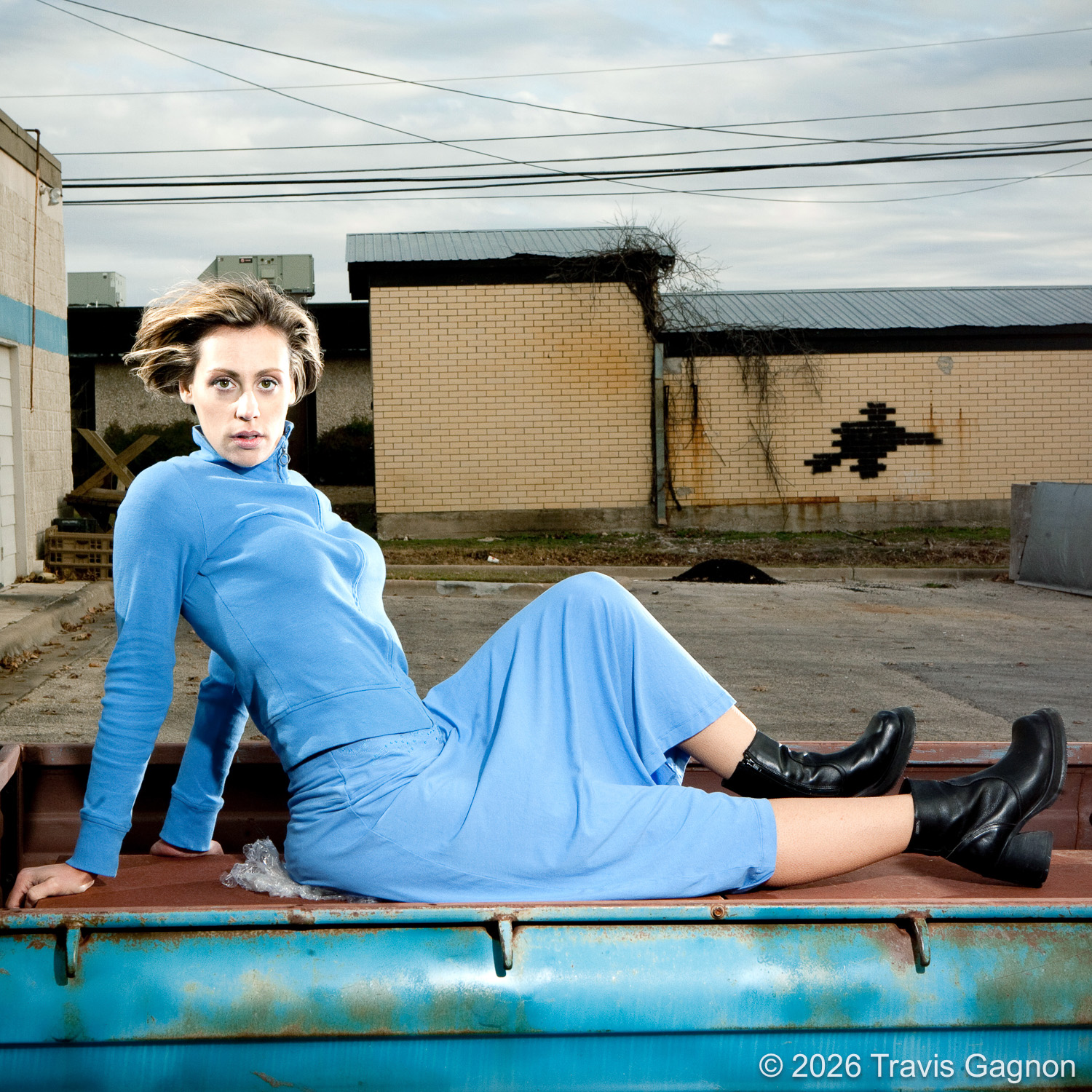
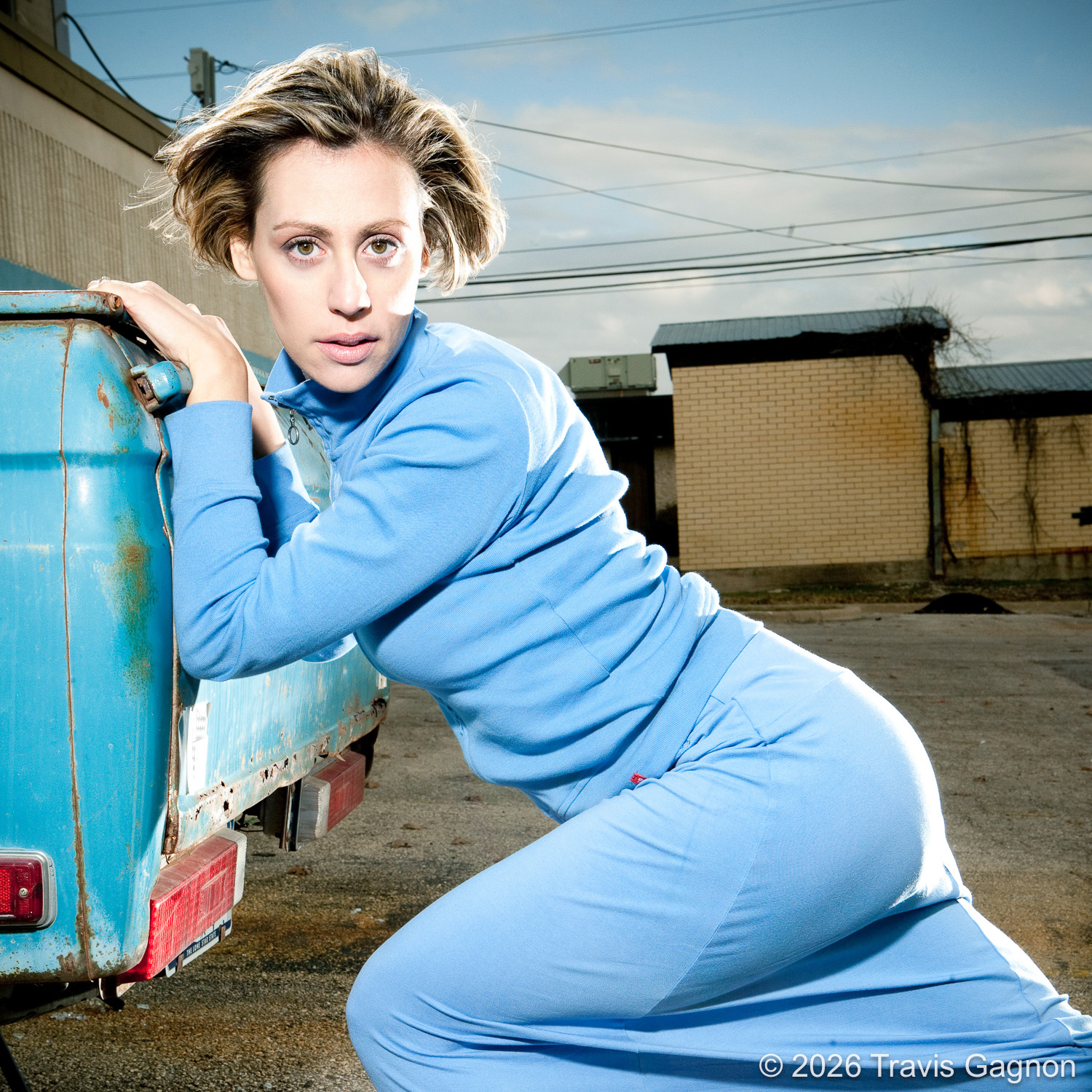
Mon camion bleu est tombé en panne is about a time when machines were expected to be maintained rather than replaced. The 1968 Datsun 1500 represents that older relationship with objects, when keeping something alive required patience, mechanical knowledge, improvisation, and a willingness to get your hands dirty. Age was not necessarily a reason to discard something. A truck could remain useful for decades because someone continued to repair it, understand it, and accept the work required to keep it moving.
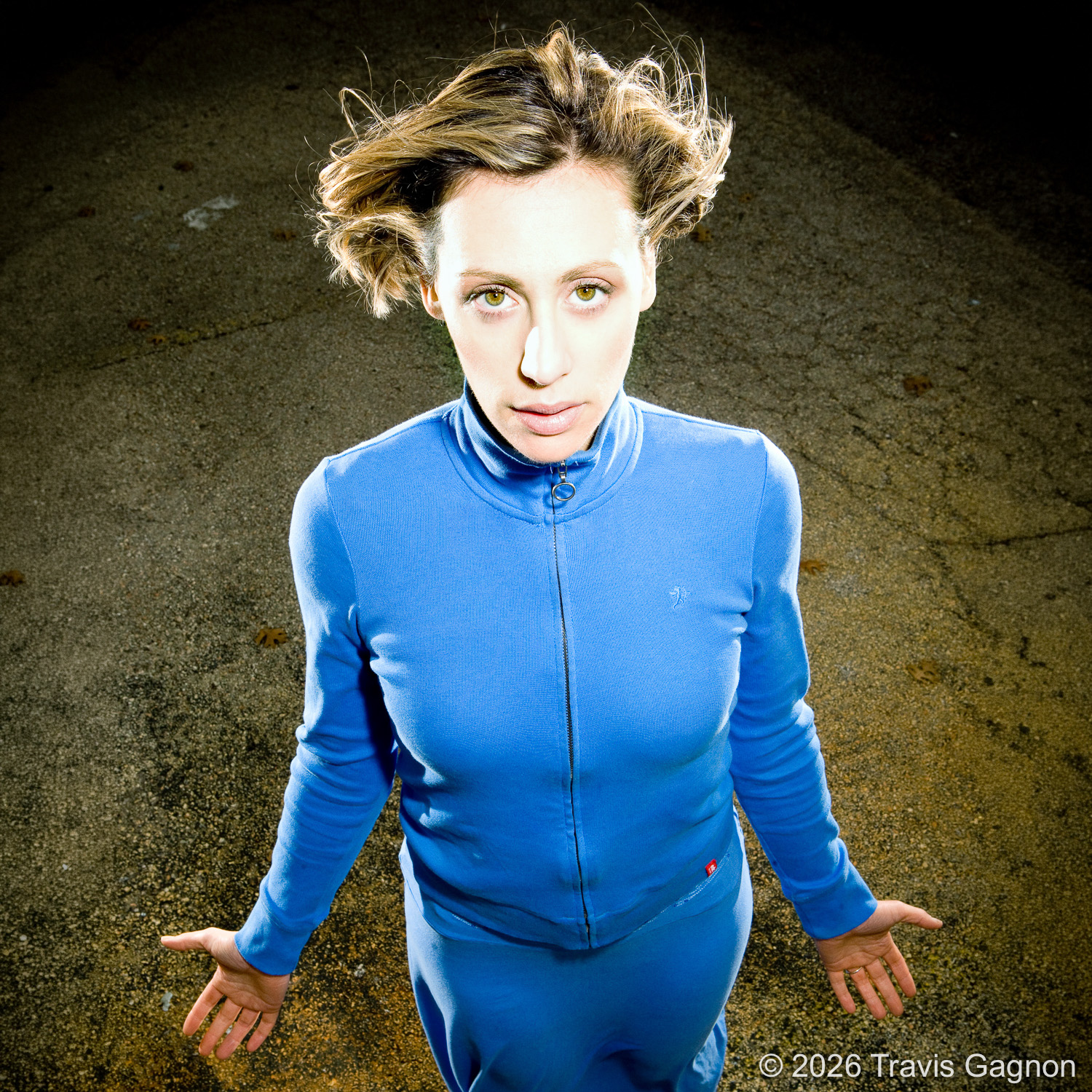
The woman in blue becomes an extension of the truck itself. Her clothing mirrors its color, visually connecting the two and suggesting that the relationship is more personal than simple transportation. As she leans against it and occupies its worn industrial surroundings, the truck becomes almost another character in the photographs. Its final breakdown is therefore a loss. Something dependable, familiar, and repeatedly rescued has finally reached the point where determination alone can no longer keep it alive.
The final image separates her from the truck and leaves her standing alone with her hands open. The gesture suggests frustration, resignation, and ultimately the need to find another way forward. The machine she depended upon can no longer carry her, leaving hitchhiking as an almost absurdly simple alternative. The series reflects on our attachment to the things we maintain, the satisfaction once found in repairing rather than replacing them, and the uneasy moment when even something we have fought to preserve finally stops.