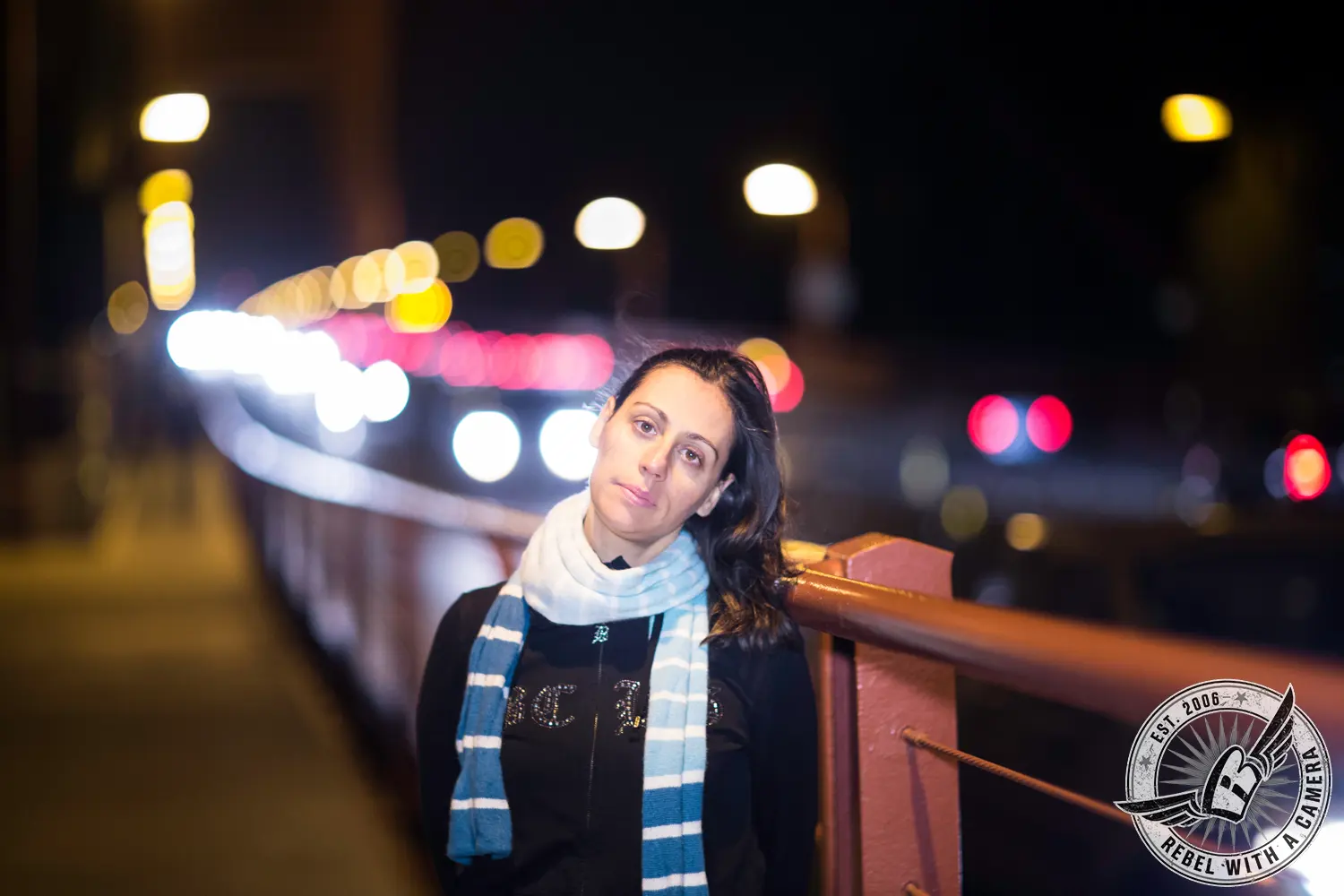
Earlier this year, I was asked to teach a rather complete and thorough portrait photography off camera lighting workshop in the San Francisco Bay Area. I figured it would be fun to get out of Austin during the month of August, so I accepted the challenge.
I put together a list of all the things I thought were important to portrait photography and the way I shoot those portraits. As I developed what would eventually become the class syllabus, I realized that I really do have a style of my own. I looked at the way I shoot and then at the way other people shoot and saw that there was a remarkable difference in style and technique. It was a very introspective time.
I traveled to the Bay Area and sat down to give a brief history of the universe according to photography. I quickly found that the wealth of knowledge I had to impart far exceeded my syllabus tenfold. Apparently, talking to a photographer is a lot more useful than simply reading what the photographer writes.
I found that there were so many “if” statements in my in-person instruction about what to do if certain situations arose to complicate a photograph that I realized teaching by answering questions was often the most useful approach for a student. Sometimes there is one question that can be answered in person that completes the puzzle in the mind of the student.
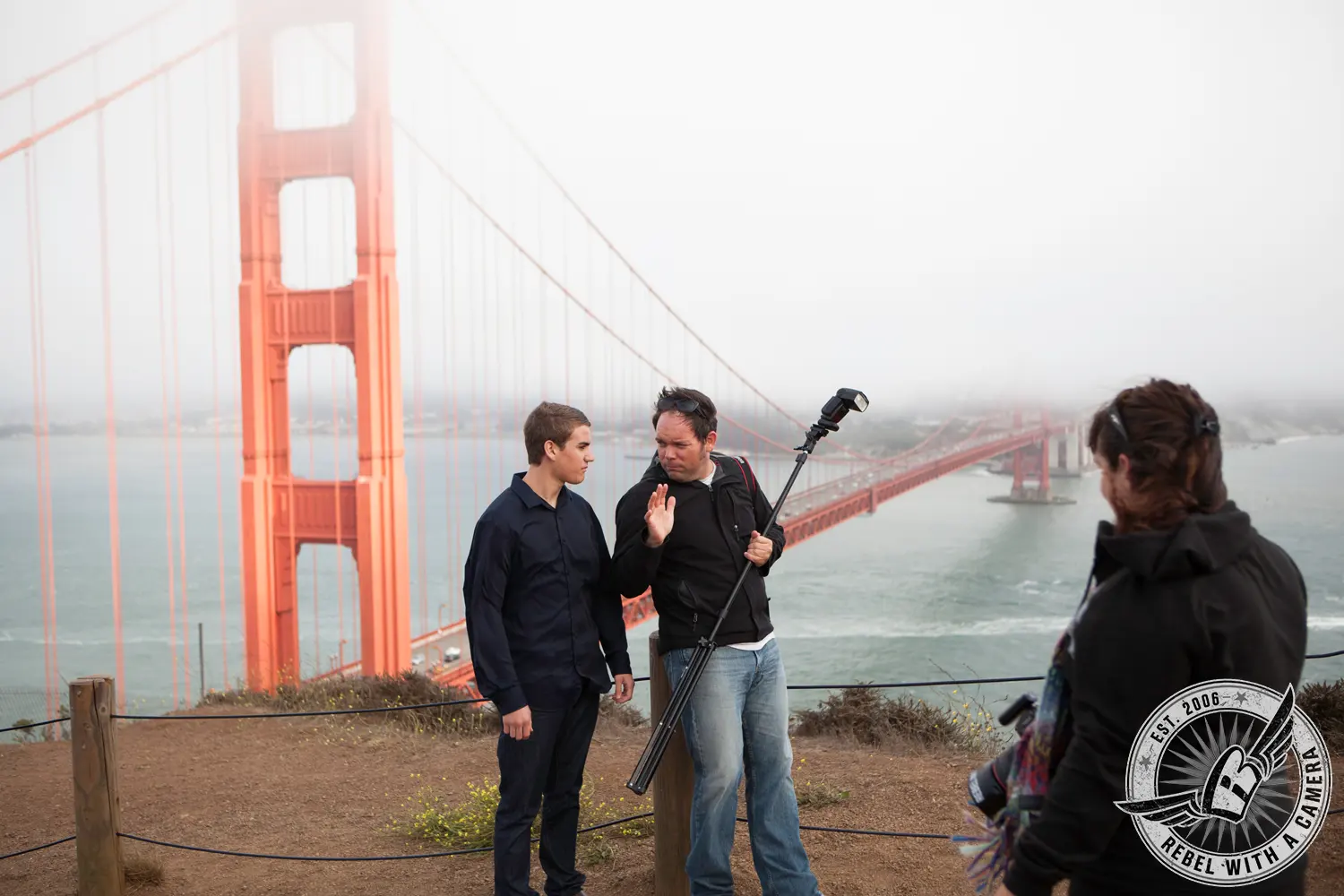
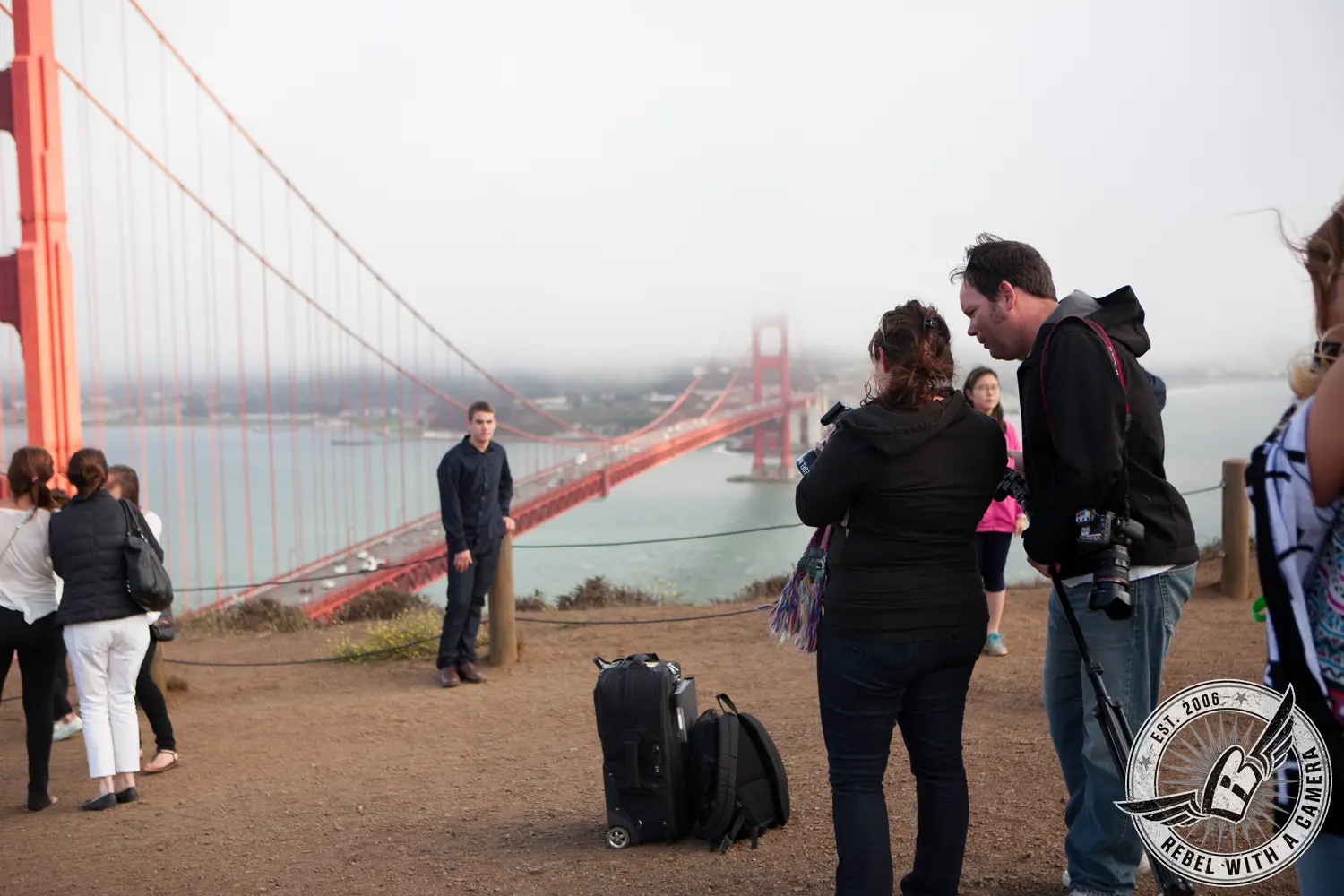
After hours of chatting, answering questions, and covering the basics, including light, exposure, depth of field, and shutter speed, we moved on to things that seem to baffle people, such as flash, off-camera flash, and flash color modifiers. We then embarked on a journey to the Golden Gate Bridge to photograph a model and reinforce the concepts we had discussed.
I’m a trial-by-fire kind of person. I’m certain that a soldier does not fully trust that his firearm will protect him in battle until he has fired it in battle. No matter how much theory and classroom training someone has had, nothing prepares you for the real world like being dropped into a war zone and seeing how the battle is actually waged.
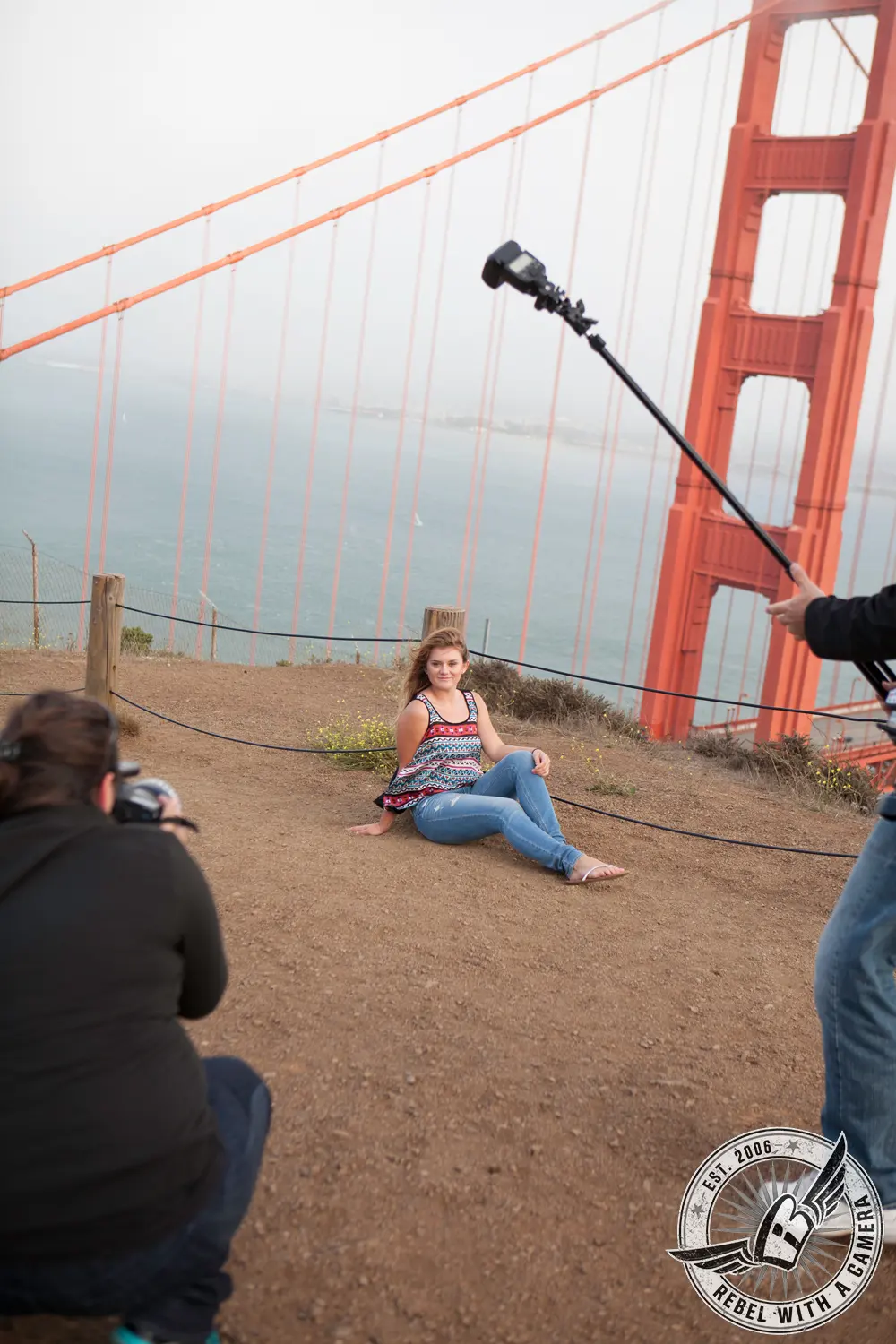
I had picked a spot just north of the Golden Gate Bridge to photograph the model on an overlook that also included a 80-plus-year-old bunker. It was about 55 degrees, foggy, and there was a 30-mile-per-hour wind whipping around everyone. In August! The model was freezing, and the curls in her hair were pretty much immediately blown out.
It was trial by fire for certain, and everything that could go wrong did. We shot using the PocketWizard Flex* wireless system with ZoneController AC3s* to control the off-camera flashes.
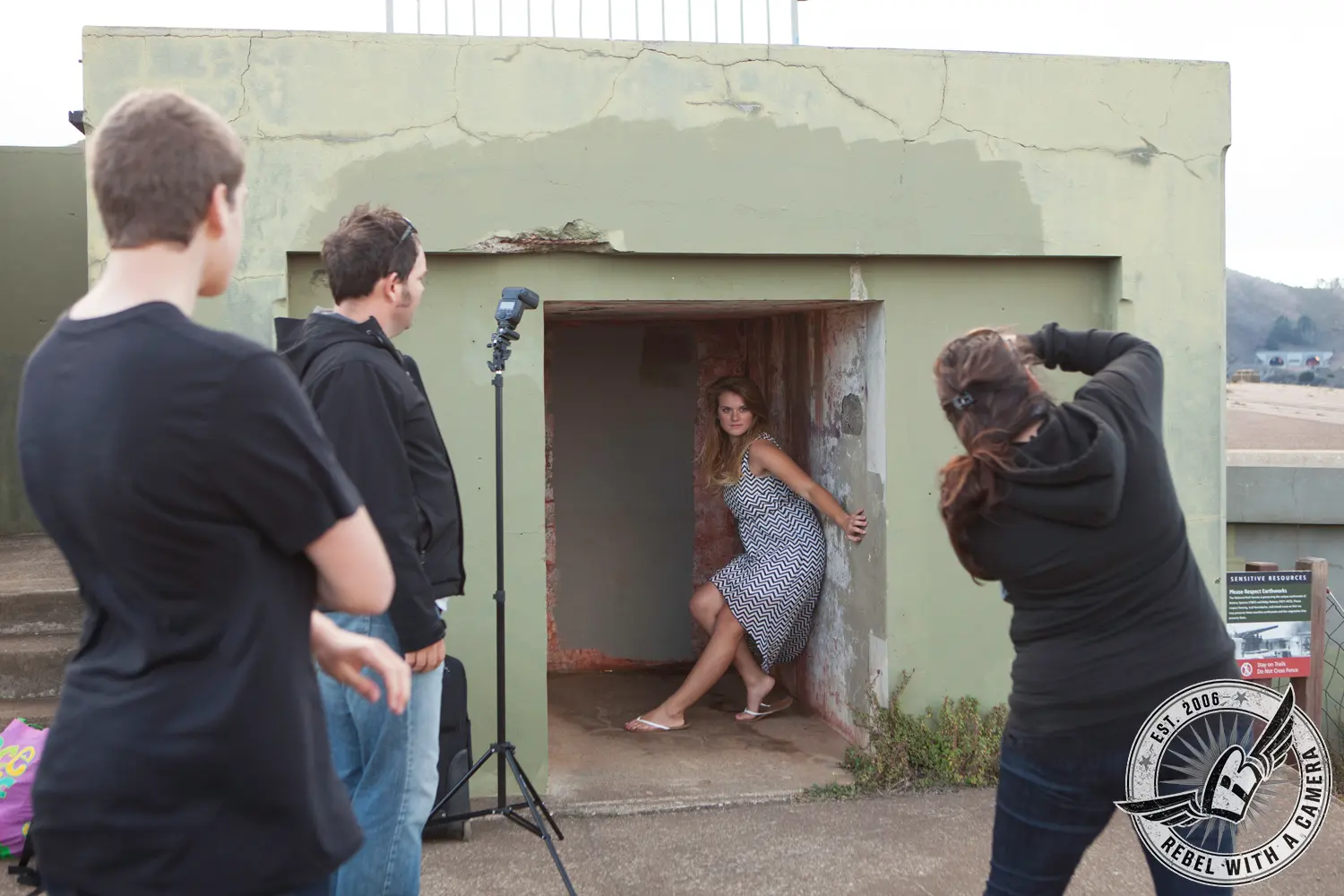
Manual exposure and manual flash control is the name of my game. For the sake of consistency, manual is my go-to setting on the camera because most of the situations I shoot in are too complicated for the camera’s meter to deal with reliably. When I teach, I do help people explore the other options on their cameras instead of relying entirely on the camera’s metering system to make decisions for them. Relying on automatic metering can often yield inconsistency, which is not ideal when you have a freezing model and are trying to capture a shot before the fog rolls in.
We shot for about an hour and a half, fighting the wind for some of the photographs to capture the fantastic views of the Golden Gate Bridge when it was not obscured by fog. The rest of the time, we took advantage of the bunker, which was sunk into the ground right next to the overlook.
It was a fantastic lesson in how to work in adverse situations, because there are plenty of those in almost any kind of photography work.
Our models were not perfect by any means. They wore clothes that were not remarkable, had hair and makeup that were not remarkable, and faced a less-than-desirable weather situation at the bridge with the cold wind and fog. The goal, however, is to prevail over all of those obstacles and still create interesting images that draw people in.
One of our students, Maria, benefited greatly from seeing that even someone as seasoned a professional as I am still has to work hard when everything is not perfect. She learned to adapt, think on her feet, and respond to everything from finding parking to going out on the bridge right around the time they tell you to get off. It was a valuable lesson in many different facets of photography.
I hope to teach more of these workshops to really enlighten people about how to create a more interesting image with off camera flash. If you are interested, drop me a line to get me motivated to teach more of these classes.
*The PocketWizard Flex TT5 transmitter systems and my Canon strobe systems have since been replaced with the Westcott FJ400, Westcott FJ100 and the FJ-T1m due to extensive operational failures and inconsistent exposure from the PocketWizard high-speed equipment. PocketWizard has a friendly and somewhat helpful customer service department, but it has yet to restore my confidence in the PocketWizard brand of high-speed remote flash radios. The Westcott strobes are powerful and integrate easily with the wireless transmitter.
Sales initiated from the above links may pay Rebel With a Camera a commission.
Leave a reply
You must be logged in to post a comment.